PECS: Why It's Not a Symbol System

Updated: Oct 29, 2025
When we talk about communication tools, it’s easy to get confused by all the different systems and approaches out there. A question I'm frequently asked when delivering training and one area that often causes confusion is the Picture Exchange Communication System (PECS). Some people assume PECS is a “symbol system,” like Makaton, Widgit, or Communicate in Print. But in reality, PECS is something quite different — and understanding this difference is key to supporting communication effectively.
This is something I often come across whilst delivering training, quite often when we are discussing what visuals are being used with individuals and/or as a whole setting, I get the answer 'PECS' when we deep dive into this it turns out that they are using a particular symbol system but they are not using it in the 'PECS' way. During recent training, someone told me they use 'little widgits' this turned out, after me viewing them, to be Makaton symbols.
I have created this blog after being inspired by watching this brilliant video by Sensory Class, (use link below to view) It prompted me to outline the differences in symbols compared to how we use the Picture Exchange Communication System in this blog. I have included references at the bottom for further reading.
Here's a great video, on facebook, by Sensory Class - Give them a follow if you don't already, they create some really good information videos!
What is PECS?
PECS stands for Picture Exchange Communication System. It was developed in 1984 by Lori Frost, MS, CCC/SLP, and Dr. Andrew Bondy, and was first used at the Delaware Autistic Program.
The goal of PECS is to teach children with autism a fast, self-initiating, functional communication system.
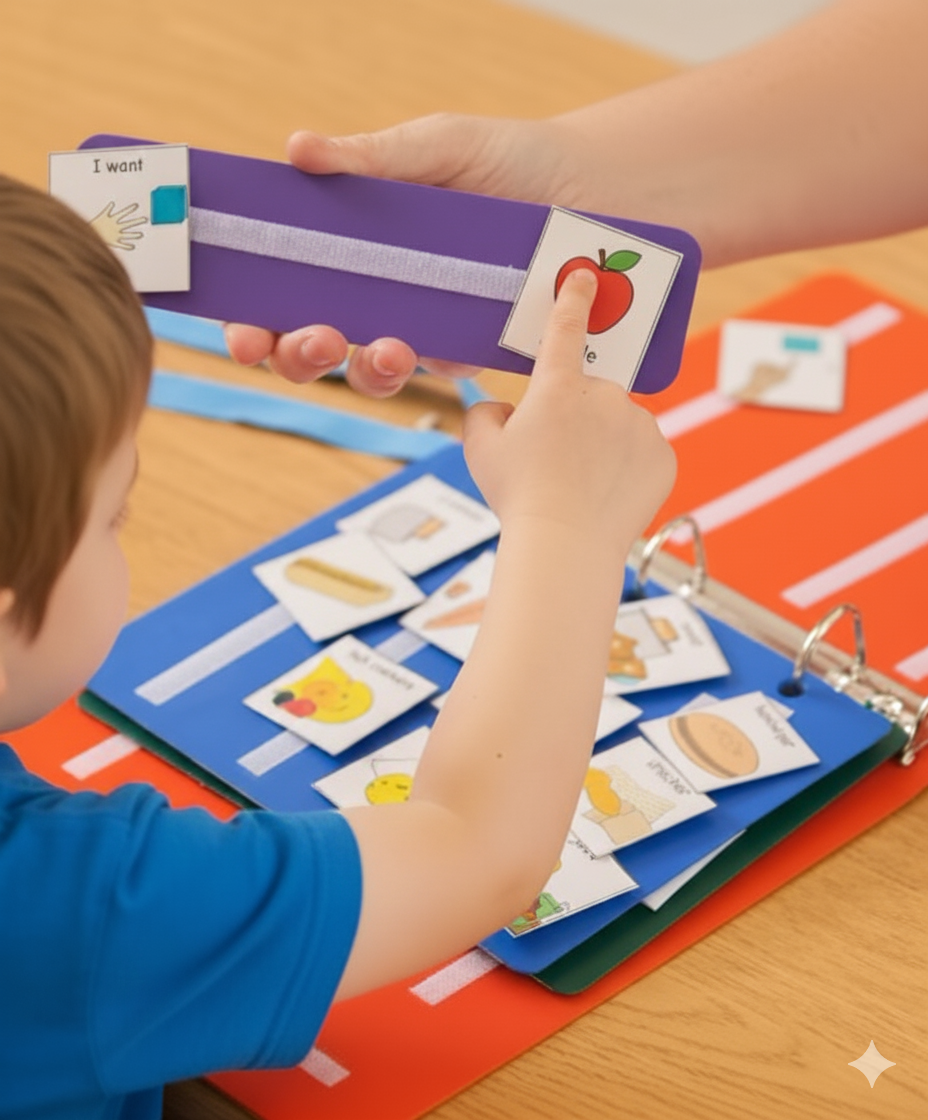
At its heart, PECS is not about what pictures you use, but how you use them. The approach is built on structured teaching, using six phases that move from simple picture exchanges (e.g., handing over a picture to request a biscuit) to building longer sentences, answering questions, and eventually commenting.
Why PECS is Not a Symbol System
A symbol system is a structured, standardised set of visuals that represent language. Please use the links to find out more. For example:
Makaton makaton.org combines speech, signs, and symbols to represent concepts.
Widgit www.widgitonline.com symbols have a consistent style, rules, and meanings across different contexts.
Boardmaker Getting Started
These systems are designed so that the same symbol always represents the same word or concept, making them consistent and transferable.
PECS, on the other hand, is not tied to any specific set of symbols. You can use photographs, line drawings, clipart, or even hand-drawn images. The pictures are simply a tool — the focus is on the exchange process.
It’s this process that makes PECS unique: it teaches the act of communication. Instead of waiting for someone to prompt or ask a question, the individual learns to approach another person, exchange a picture, and get their message across.
Why Does This Matter?
Understanding that PECS is a teaching method rather than a symbol system helps us:
Choose flexibility: We can select the most meaningful and motivating images for the individual, this could be a simple drawing or a photo.
Combine approaches: PECS can be used alongside any symbol system. For example, a child might start with PECS exchanges using Widgit symbols, and later transition to a symbol based communication book or app.
What Can We Do To Support Communication?
It's about having a range of communication opportunities on offer at all times that are modelled by adults at all times, it's very much child-led. Photos, objects, symbols, sound buttons, reaching, pointing, guiding, speech, signing. Letting children let us know what they want, a total communication approach.
There's a lot of research with regards to the use of PECS, if you would like to read more please take a look here PECS® - Picture Exchange Communication System (pecs-unitedkingdom.com).
Final Thoughts
PECS is a powerful tool for supporting communication — but it’s important to remember that it’s a communication system, not a symbol set. By keeping this in mind, we can make better choices about how to support each individual, using the right mix of approaches to help them find their voice.
Have you enjoyed reading this blog, have you found it useful? Let me know!
To find out more about the use of symbols and PECS please take a look at the following link: Picture exchange communication system | SLT | Expert providers of speech and language therapy throughout the UK. by Speech, Swallow, Communicate.
To find out more about Makaton symbols, please visit the Makaton.org website
References
Bondy, A., & Frost, L. (1994). The Picture Exchange Communication System. Focus on Autistic Behavior, 9(3), 1–19.
Frost, L. A., & Bondy, A. S. (2002). The Picture Exchange Communication System Training Manual (2nd ed.). Pyramid Educational Consultants.
Ganz, J. B., Davis, J. L., Lund, E. M., Goodwyn, F. D., & Simpson, R. L. (2012). Meta-analysis of PECS with individuals with ASD. Journal of Autism and Developmental Disorders, 42(9), 1863–1879.
PECS United Kingdom. (n.d.). https://pecs-unitedkingdom.com
The Makaton Charity. (n.d.). https://www.makaton.org
Widgit Software. (n.d.). https://www.widgit.com
**Disclaimer**
The information provided on this website is for general informational purposes only and thoughts and information expressed in these blogs are from my own personal thoughts and real life experiences, they do not contain advisory content. While always striving to provide accurate and up-to-date content, there are no guarantees about the completeness or reliability of any information. Any reliance you place on such information is strictly at your own risk.
All information on the site is provided in good faith, however, no representation or warranty is made of any kind, expressed or implied, regarding the accuracy, adequacy, validity, reliability, availability, or completeness of any information on the site.
These blogs are created from my own personal experience and are for general information purposes and are not, in any way, advisory. Where needed I have included research and reference links and further reading articles.
At times I have used AI generated content to reword my own thoughts and may include AI research of information relevant to the blog and to create images relevant to my blogs, however whenever possible I have used my own images with permission from those featured in the images. My blogs are open to fair use.
Any questions or queries please do get in touch - alimakatontutor@gmail.com


Comments